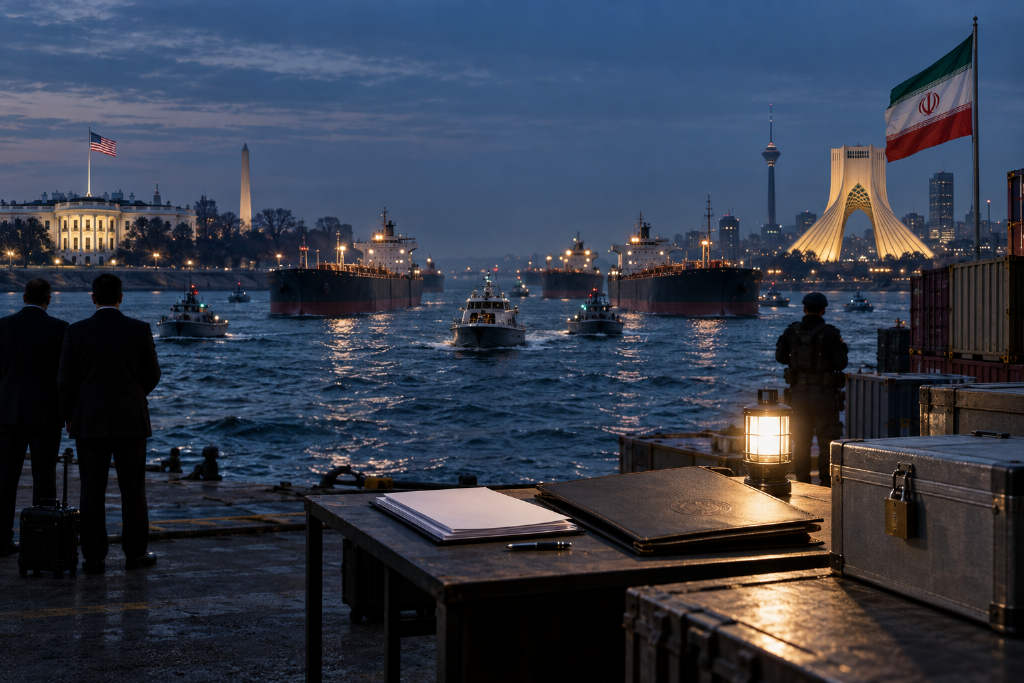
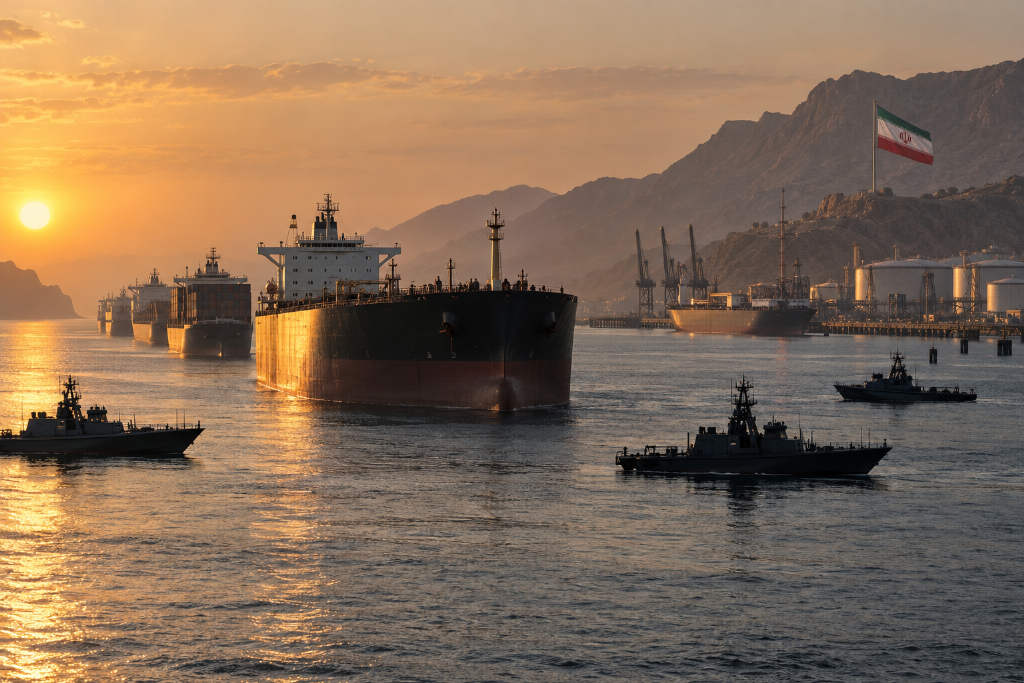
Donald Trump2026-09-27 05:17:45Trump rejects Iran’s Hormuz ceasefire proposal as Tehran says no formal U.S. reply has arrivedU.S. President Donald Trump said on Sept. 26 that he had rejected Iran’s proposed ceasefire framework tied to the Strait of Hormuz, saying Tehran wanted talks because it had been "defeated too badly." A day later, Iranian Foreign Minister Abbas Araghchi said Tehran had seen Trump’s initial reaction but had not yet received any formal U.S. position through mediators. According to the report, Iran presented a seven-day roadmap during the United Nations General Assembly week in New York and sent it to Washington through Qatari mediators. The proposal called for the return of frozen Iranian assets, relief on oil-related sanctions, and an end to U.S. maritime blockade operations targeting Iranian ports within four to five days. It would also extend the ceasefire to Lebanon and Yemen, with shipping through the Strait of Hormuz resuming on day seven and final-stage negotiations beginning at the same time. The picture is further complicated by conflicting messages on Iran’s nuclear program. President Masoud Pezeshkian sounded open to inspections in an interview with CBS, while a senior Iranian official told Reuters that Tehran would not give ground on enrichment rights or move highly enriched uranium out of the country. The gap in messaging has left the real negotiating position unclear, while Washington and Tehran remain split over who should make the first concession.290
Iran2026-09-25 16:45:06Iran says nuclear stance will not change as Hormuz reopening hinges on U.S. meeting conditionsAn Iranian senior official told Reuters on Sept. 26 that Tehran would not make concessions on its nuclear program even if the United States accepted Iran’s proposal to reopen the Strait of Hormuz. The official said the waterway would remain closed until Washington met what Iran described as 「all conditions」. Earlier, Iranian Foreign Minister Araghchi said Tehran had put forward a seven-day plan tied to reopening the strategic shipping route. The proposal includes ending hostilities across multiple regions, lifting the U.S. maritime blockade on Iranian ports, releasing frozen assets, and removing oil sanctions. The remarks indicate that any reopening of the Strait of Hormuz, a critical passage for global energy shipments, remains conditional on a broader set of demands from Tehran rather than a standalone agreement on transit.240
Iran2026-08-09 13:31:33US Officials: Trump Patient on Iran Standoff, Focus on Strait of HormuzAccording to The Wall Street Journal, US officials say President Donald Trump is prepared to wait out the diplomatic standoff with Iran, especially while gasoline prices remain at current levels. A White House official insists the US has achieved all military objectives against Iran. Trump's focus now is the free flow of world energy through the Strait of Hormuz; Washington will keep military options if Iran again attacks shipping. On the nuclear file, officials say Trump recently told senior aides that US forces destroyed three key Iranian nuclear facilities last year, and Iran may not restart nuclear work during his term. Trump has said at recent meetings that intelligence would detect any attempt to rebuild nuclear sites or produce a bomb in secret, and he sees the threat of more US strikes as a lasting deterrent. If the nuclear program is contained and the strait reopens, Trump is more likely to extend the ceasefire indefinitely. If Iran fully reopens the strait, he is expected to lift the US military blockade of Iranian ports.1720
Donald Trump2026-08-02 08:59:27Trump says US would pause attack on Iran if a deal is reached on nuclear limits and Hormuz reopeningU.S. President Donald Trump said on Aug. 2 that Washington would hold off on plans to attack Iran if a deal can be reached quickly to limit Tehran’s nuclear program and fully reopen the Strait of Hormuz. He said Iran and other Middle Eastern countries need time to finalize the terms of such an agreement. Trump also said Israel supports a pause in negotiations, while the United States is keeping strike preparations in place so it can move quickly if talks fail. Iran rejected the idea that it is seeking a pause in military action and said its armed forces remain on the highest alert. Earlier, Iranian Foreign Minister Abbas Araghchi warned that any new attack by the United States or Israel would trigger a “corresponding response.” Saudi Arabia, meanwhile, called for dialogue to ease tensions.1760
Marco Rubio2026-08-02 04:36:40Rubio says U.S. strikes made Iran more willing to negotiate on nuclear program and Strait issuesU.S. Secretary of State Marco Rubio said in an interview with Fox News that Iran is now more willing to negotiate on issues including its nuclear program and the Strait of Hormuz after Washington’s military strikes. Rubio said the U.S. attacks destroyed Iran’s navy, air force, missile defense systems, launchers, and weapons production facilities, and had "severely degraded" the country’s defensive capabilities. At the same time, he said Iran still has missiles and drones and remains capable of causing damage. Rubio also argued that Iran no longer has the conventional shield it had intended to rely on, and said that shift is the only reason Tehran is now willing — and in some cases appears eager — to reach agreements on denuclearization and Strait-related matters. The remarks were cited by Odaily, which attributed the report to Jin10.2060
Marco Rubio2026-08-02 04:34:42Rubio says Iran is now more willing to negotiate on nuclear program and Strait of HormuzAccording to a Jin10 report citing an interview on Fox News, U.S. Secretary of State Marco Rubio said Iran is now more willing to negotiate on issues including its nuclear program and the Strait of Hormuz after Washington’s military strikes. Rubio said the U.S. attacks destroyed Iran’s navy, air force, and missile defense systems, and had "severely degraded" its defensive capacity. He added that Iran no longer has a "conventional shield," a change he said has altered the negotiating dynamic and made Tehran more open to reaching an agreement on denuclearization and the strait.2000
Israel2026-07-29 15:47:47Israeli official says Iran still operating centrifuges at “Gao Mountain”According to Jin10, a senior Israeli official said Iran is still deploying centrifuges at “Gao Mountain,” and Israel does not believe Tehran’s nuclear program has been completely destroyed. The official said Israel had previously struck Iranian nuclear scientists and related facilities, inflicting a major setback on the program, but added that the damage was not permanent. The official also said enrichment activity is still taking place at the site. He warned that if Iran attempts to rebuild its nuclear program or its ballistic missile capabilities, Israel would not hesitate to act again. The remarks, as cited by ChainCatcher, frame Israel’s assessment as one in which earlier operations caused significant disruption but did not eliminate the underlying capability.1910
Israel2026-07-26 15:49:23Netanyahu says U.S. trip is meant to hear Trump’s views on IranIsraeli Prime Minister Benjamin Netanyahu said in an interview that Israel’s conflict with Iran will end only if Iran’s current regime falls or is weakened to the point that it is forced to abandon its nuclear program, according to a report cited by BlockBeats from China Central Television. He said Iran’s nuclear program must be stopped “whether or not there is an agreement.” Speaking about his planned meeting with U.S. President Donald Trump, Netanyahu said the purpose was not to deliver new intelligence, as U.S. and Israeli military and intelligence agencies are already working closely together. He said the trip is intended to discuss the issue with Trump and understand his thinking, adding that how the situation develops depends to a large extent on Trump’s final decision. Netanyahu also commented on a potential U.S.-Saudi nuclear agreement, saying he agrees with Trump’s position that Saudi Arabia should only receive a civilian nuclear deal. He added that Israel and the United States would not allow Saudi Arabia to have a military nuclear program. Netanyahu also said he will “absolutely” attend the United Nations General Assembly in New York in September.1830